Surfaces Built to Stop
Repeating Maintenance
Rock Landscape Design and Installation in Newport News for drainage areas and properties needing low-maintenance outdoor designs
Coastal Virginia drainage patterns create situations where organic mulch washes away during heavy rain events, leaving bare soil and exposed landscape fabric that degrades curb appeal within one season. Decorative rock installation provides a permanent solution for landscape beds, drainage channels, and areas where water flow prevents traditional mulch from staying in place. East Coast Cuts & Landscape designs and installs rock landscapes throughout Newport News using weed barriers and proper base preparation that prevent settling and maintain visual appeal for years without seasonal replacement.
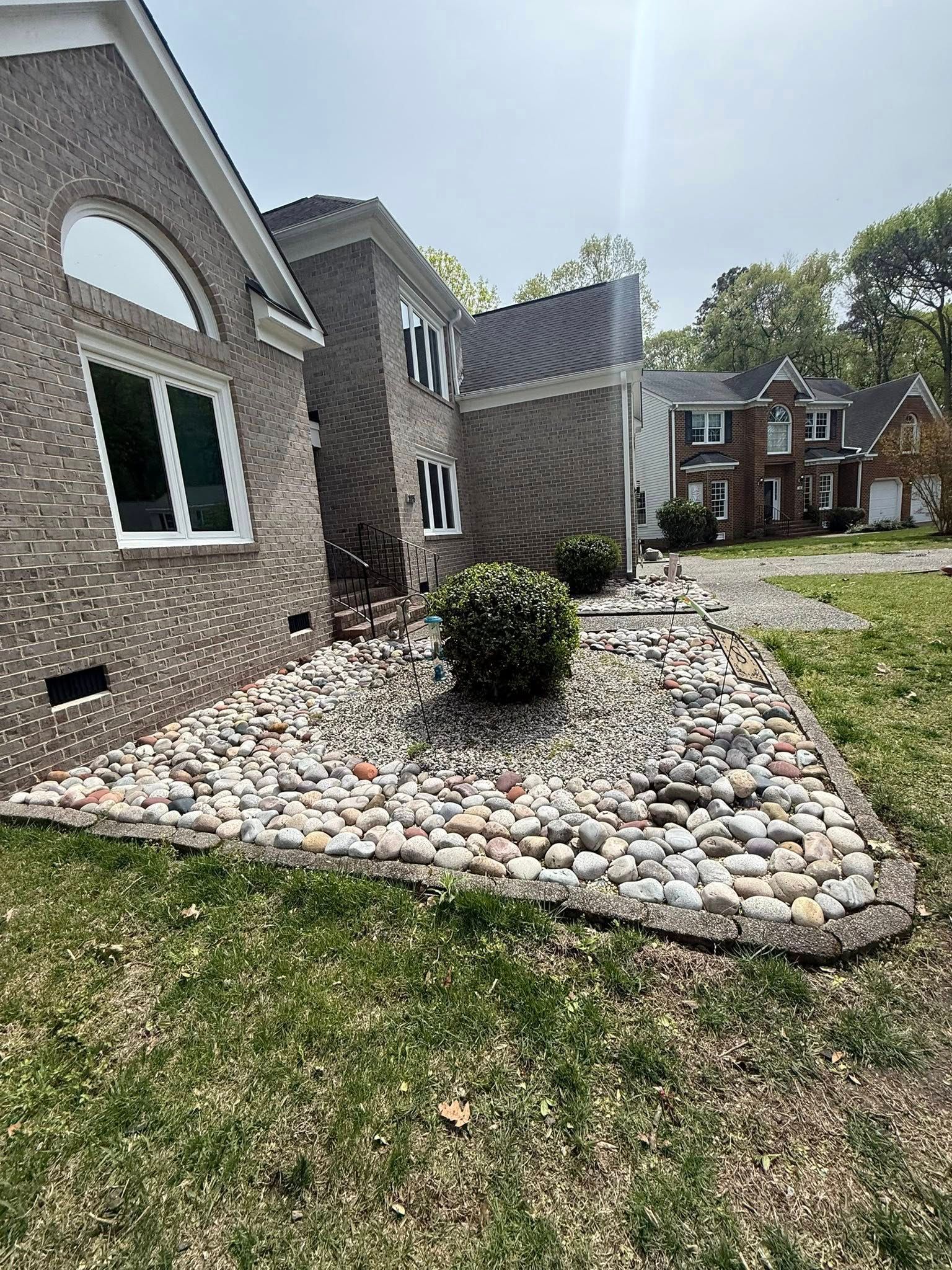
Installation involves excavating the bed to appropriate depth, laying commercial-grade weed barrier fabric, and placing decorative rock in sizes and colors that complement your property style. Rock options range from small pea gravel for tight spaces to larger river rock for bold visual contrast, with selection based on whether the area handles foot traffic or serves purely decorative purposes.
Request a custom landscape consultation to review drainage concerns and design options for your outdoor spaces.
What Proper Rock Installation Requires
Weed barrier fabric must extend beyond the visible rock area and be secured with landscape staples every two feet to prevent shifting during installation and settling over time. Without proper barrier placement, weeds grow up through rock from below, and removing them becomes difficult because pulling disturbs the surrounding stones and creates uneven surfaces.
After installation completes, you see defined borders where rock meets turf or hardscape, consistent coverage without bare spots, and improved water flow in areas where drainage previously caused erosion or standing water. The landscape requires no seasonal refreshing, no color fading concerns, and minimal maintenance beyond occasional leaf blowing during fall.
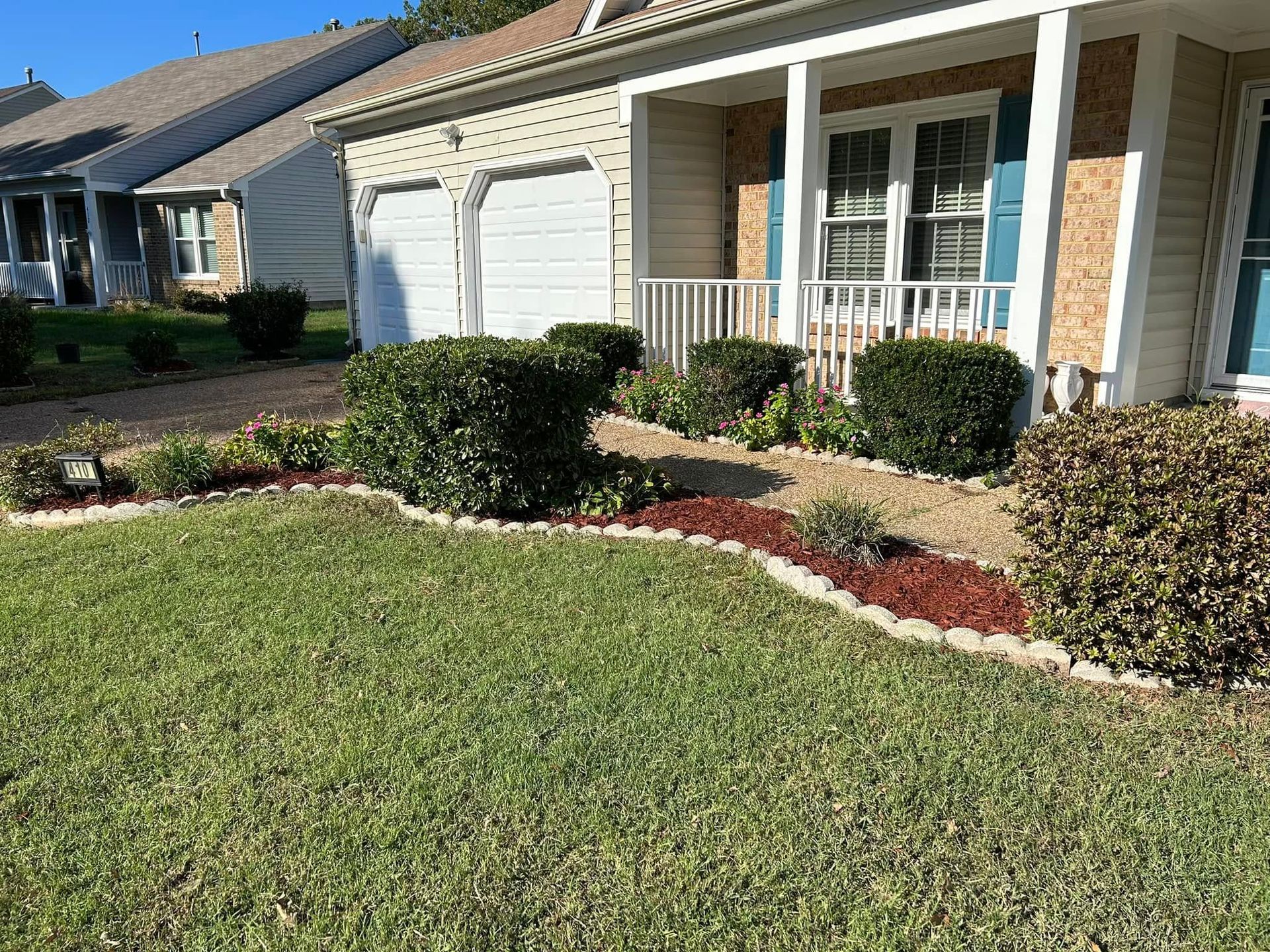
Rock installations work particularly well around downspout discharge areas where water volume prevents organic materials from staying in place, and in full-sun locations where mulch would fade rapidly and require frequent replacement. Custom layouts can incorporate rock borders around traditional mulch beds, creating visual separation between planting areas and reducing the amount of organic material needed for the overall landscape design.
Answers to Frequent Service Questions
Rock landscape projects require planning around drainage patterns and existing property features to produce results that function correctly and match your maintenance expectations.
What size rock works best for residential landscape beds?
Pea gravel in the three-eighths inch range stays in place better than larger stones in high-traffic areas, while one-to-three-inch river rock creates bolder visual impact in beds viewed from a distance.
How does weed barrier prevent growth without harming drainage?
Commercial weed barrier blocks light that seeds need for germination while allowing water to pass through perforations in the fabric, so rainfall reaches plant roots without creating weed growth opportunities.
Why do some rock installations develop low spots over time?
Settling occurs when base preparation skips soil compaction or when insufficient rock depth allows the weight of the stones to compress the underlying fabric and soil.
When should rock be chosen over mulch for Newport News properties?
Rock makes sense in drainage channels, along downspout paths, around mechanical equipment, and in areas where seasonal mulch replacement becomes impractical due to access or maintenance frequency concerns.
What maintenance does rock landscaping require long-term?
Occasional leaf blowing keeps organic debris from accumulating on the surface, and spot-treating any weeds that emerge along borders prevents root systems from spreading under the barrier fabric.
East Coast Cuts & Landscape evaluates your property's drainage patterns and maintenance goals before recommending rock types and installation approaches. Arrange an on-site consultation to discuss custom landscape layouts and material options that address your specific outdoor concerns.